

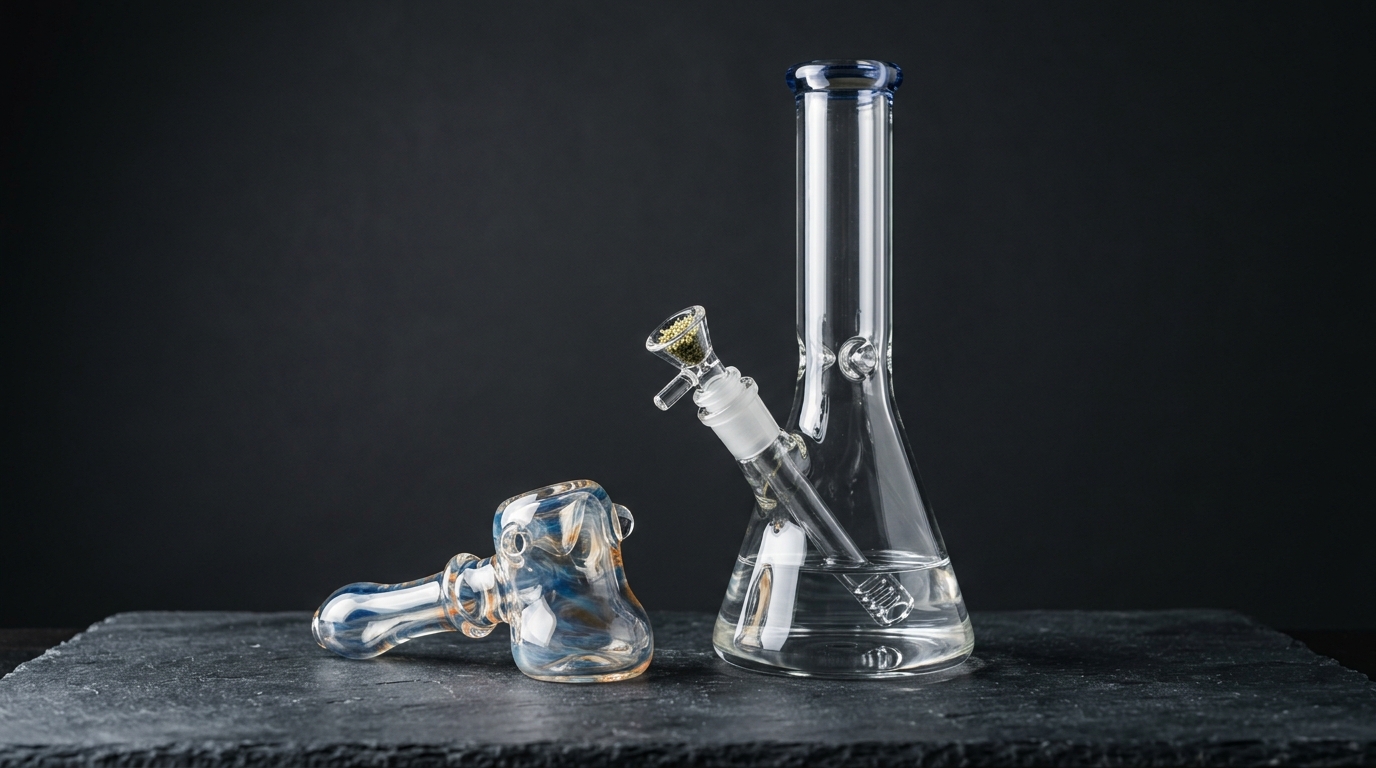
The bong vs pipe debate is one of the oldest in smoking culture, and the honest answer depends entirely on what you value. Both are valid, both are popular, and the best choice is the one that fits how you actually smoke.
Here's a straight breakdown of how each one works, what it does well, and where it falls short.
How a Glass Bong Works
A glass bong uses water filtration to cool and filter smoke before it reaches your lungs. You pack herb in the bowl, light it, and inhale through the mouthpiece — drawing smoke down the downstem, through the water, and up into the chamber. When you lift the bowl, you clear the chamber in one pull.
The water does two things: it cools the smoke significantly and catches some of the heavier particulates and ash. The result is a noticeably smoother, cooler hit than you'll get from any dry piece.
How a Glass Pipe Works
A hand pipe is simpler — pack the bowl, cover the carb with your thumb, light, inhale, then release the carb to clear. No water, no downstem, no assembly. Just a bowl and a tube.
The smoke goes from flame to lungs with very little distance in between, which means it's warmer, more direct, and hits faster.
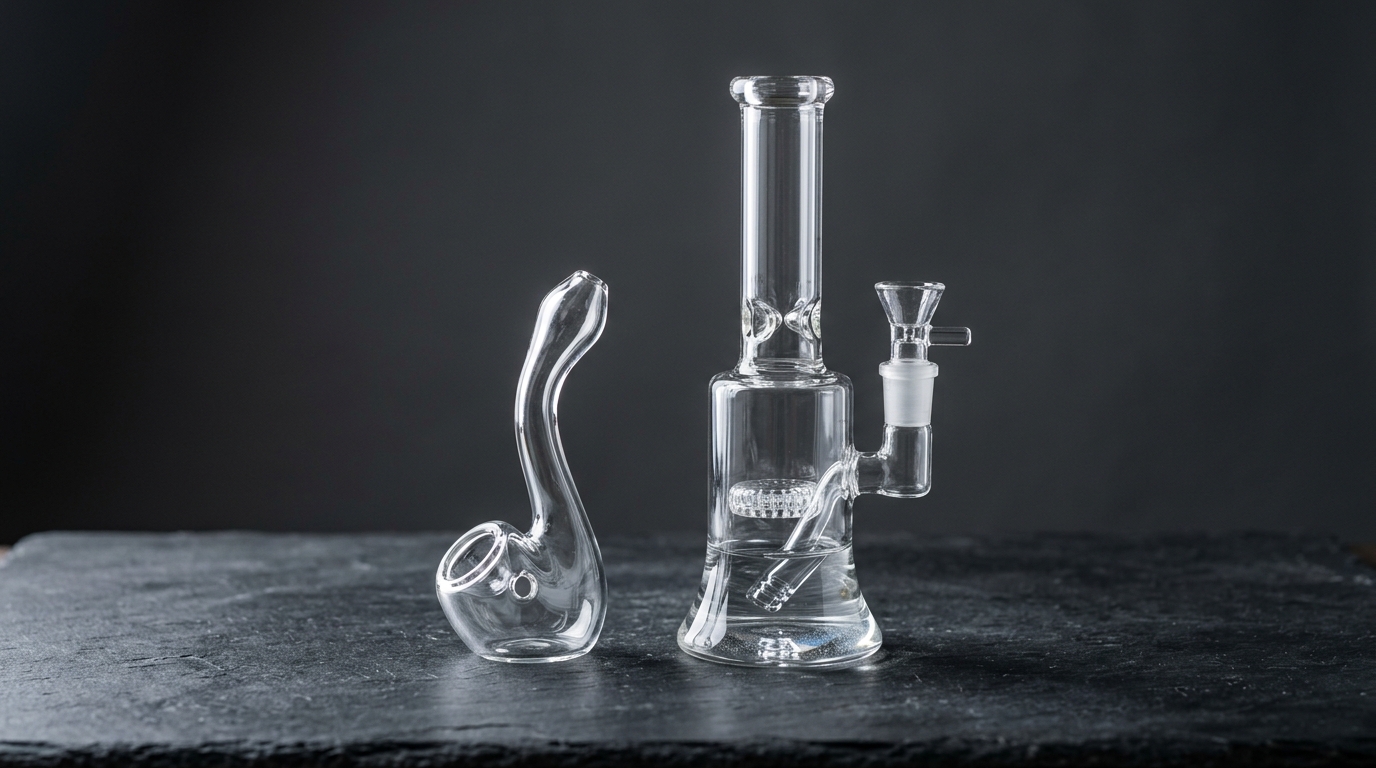
The Case for a Bong
- Significantly smoother hits — water cooling makes a real difference, especially for heavy sessions
- Larger pulls — the chamber lets you build up more smoke before clearing
- Better filtration — water catches ash and some particulates before they reach your lungs
- More efficient — a sealed chamber means less smoke escaping between puffs
- Percolator upgrades — percolator bongs add a second stage of diffusion for exceptionally smooth hits
The Case for a Pipe
- Portable — fits in a pocket, takes no setup, goes anywhere
- Simple — no water changes, no cleaning the chamber, no downstems to manage
- Lower entry cost — quality hand pipes start at a lower price than bongs
- Quick sessions — no setup, just a quick hit and done
- Less to break — fewer components means fewer things that can crack or get lost
Head-to-Head: Where Each One Wins
Smoothness
Bong wins, and it's not close. Water filtration cools smoke substantially — a quality beaker bong delivers a noticeably cooler hit than any dry pipe. If you smoke frequently or are sensitive to harsh smoke, the difference is significant.
Portability
Pipe wins. A bong requires water, a flat surface, and mindful handling. A pipe lives in your pocket.
Flavor
This one's closer. Many prefer the flavor from a pipe because the smoke is less diluted by water. A very clean bong with fresh water will taste excellent — but a dirty bong tastes far worse than any pipe. Freshness matters.
Value Per Session
Bong wins. The chamber system lets you get more from less — you're not losing smoke to the air the way you can with a pipe.
Social Use
Bong wins in a group. Larger chambers, easier rotation, and a natural ritual that slows things down.
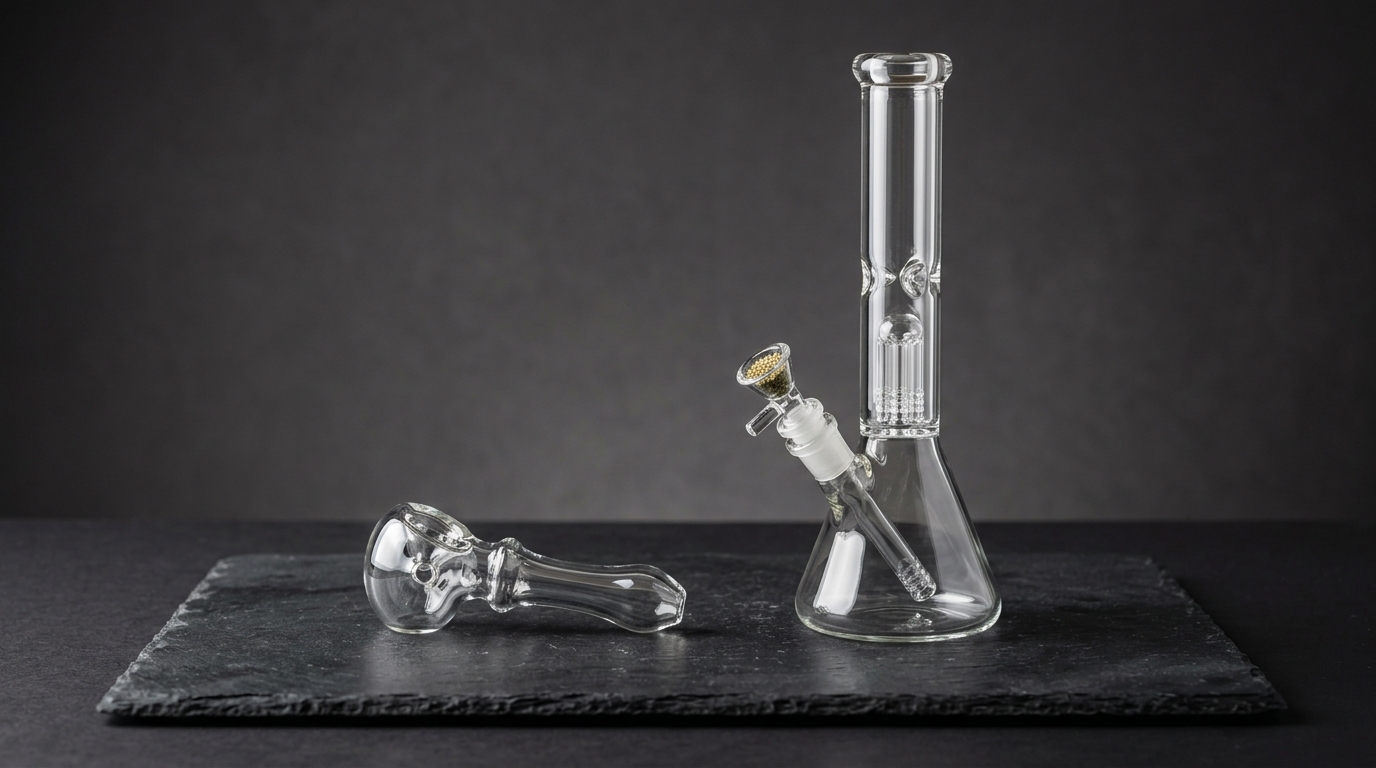
Which Should You Choose?
If you smoke regularly, at home, and you care about the experience — a glass bong is the better investment. Smoother hits, larger pulls, and water filtration add up session after session. A quality 9mm thick beaker bong or straight tube bong will outlast years of regular use and genuinely upgrade how your sessions feel.
If you need something portable, don't want to deal with water, or you're looking for a quick option for occasional use — a pipe does the job with zero setup.
For most people, the real answer is both: a glass bong at home, a pipe for on the go. Explore our full glass bong lineup at The Encore Collection.


